"Adventure: the pursuit of life." - Daniel Roy Wiarda

"Adventure: the pursuit of life."

-Daniel Roy Wiarda

Tuesday, April 5, 2011

Do You Speak W(h)ale?

Hello, dear readers. Happy April! Spring has come to England, and it is absolutely beautiful (sorry everyone on the East Coast. One day you will know a time without snow, or even bipolar temperature changes). Daffodils are everywhere, the trees are starting to unfurl their first leaves, there are at least eighty dogs frolicking in the park at any given time (this might be a bit of an exaggeration), and the birds are chirping at one o'clock in the morning (this is not an exaggeration - it's just bizarre). Before I get into the travel adventure part of this blog, I just want to share the first verse of a beautiful poem. I wish that I could take credit for finding it, but I was led to it by a friend (even though I'm the one who took the nineteenth-century poetry module last semester. Ahem.).

'Home Thoughts from Abroad'
Robert Browning

Oh, to be in England
Now that April's there,
And whoever wakes in England
Sees, some morning, unaware,
That the lowest boughs and the brushwood sheaf
Round the elm tree-bole are in tiny leaf,
While the chaffinch sings on the orchard bough
In England - now!

It might not be Browning's best work, but it captures pretty well what I'm feeling being here to see spring work its subtle changes to the landscape.

But onto travel adventures! So the Dickinson crew has been doing a lot of travelling this semester since there are only thirteen of us now - much more manageable than twenty-seven or however many of us there were last semester. A month ago we took a long weekend in Cardiff, the capital of Wales. For any science fiction fans out there, you may know that Cardiff is one of the prime filming locations for Doctor Who, and it's where Torchwood is supposedly located (speaking of science fiction/fantasy, this is going to be a fantastic month - the new series Camelot just premiered on Stars, starring the amazing and incredibly talented Joseph Fiennes as Merlin in what appears to be a very dramatic retelling of the King Arthur legend. The new series Game of Thrones, with Sean Bean and Harry Lloyd, is going to start on HBO in the middle of the month, and then Doctor Who returns on Easter. Nerds of the world, rejoice!). I must admit, I'm not terribly up on my Welsh history (everyone else, rejoice!), although I can tell you a great deal about the beginnings of the Welsh Church around the fifth century, as well as the heroic tradition in Celtic literature and its impact on the Arthurian legend. As I'm guessing that you really don't want to read that, however, I shall refrain. I do know that Cardiff wasn't really an important city until the coal industry became big. It's right on the south coast of Wales, so it did serve as a trading port, which is probably why the castle was built early on, but it doesn't have the history of a city like Edinburgh, say. Anyway, I'll stop rambling and just get to the pictures, shall I? I feel like you as the reader are going to start brandishing cutlery and yelling, 'Get on with it!' Monty Python style (which I got to watch for class last week. I know, my life is awesome.).
We arrived in Cardiff in time to enjoy a beautiful, sunny afternoon. Everyone else promptly passed out at the hostel to recover from our 5.30 a.m. departure time, but Stephenie and I decided to start exploring the city. We headed to the National Gallery and went for a wander around Bute Park.


There were daffodils everywhere, which was lovely because they're so sunny and happy-looking and they're one of my favourite flowers. Turns out that the daffodils are one of two Welsh national symbols - the other is the leek. Why? Not sure. But Saint David's Day (the patron saint of Wales) had just passed, so if there weren't enough real daffodils, there were daffodil decorations everywhere.
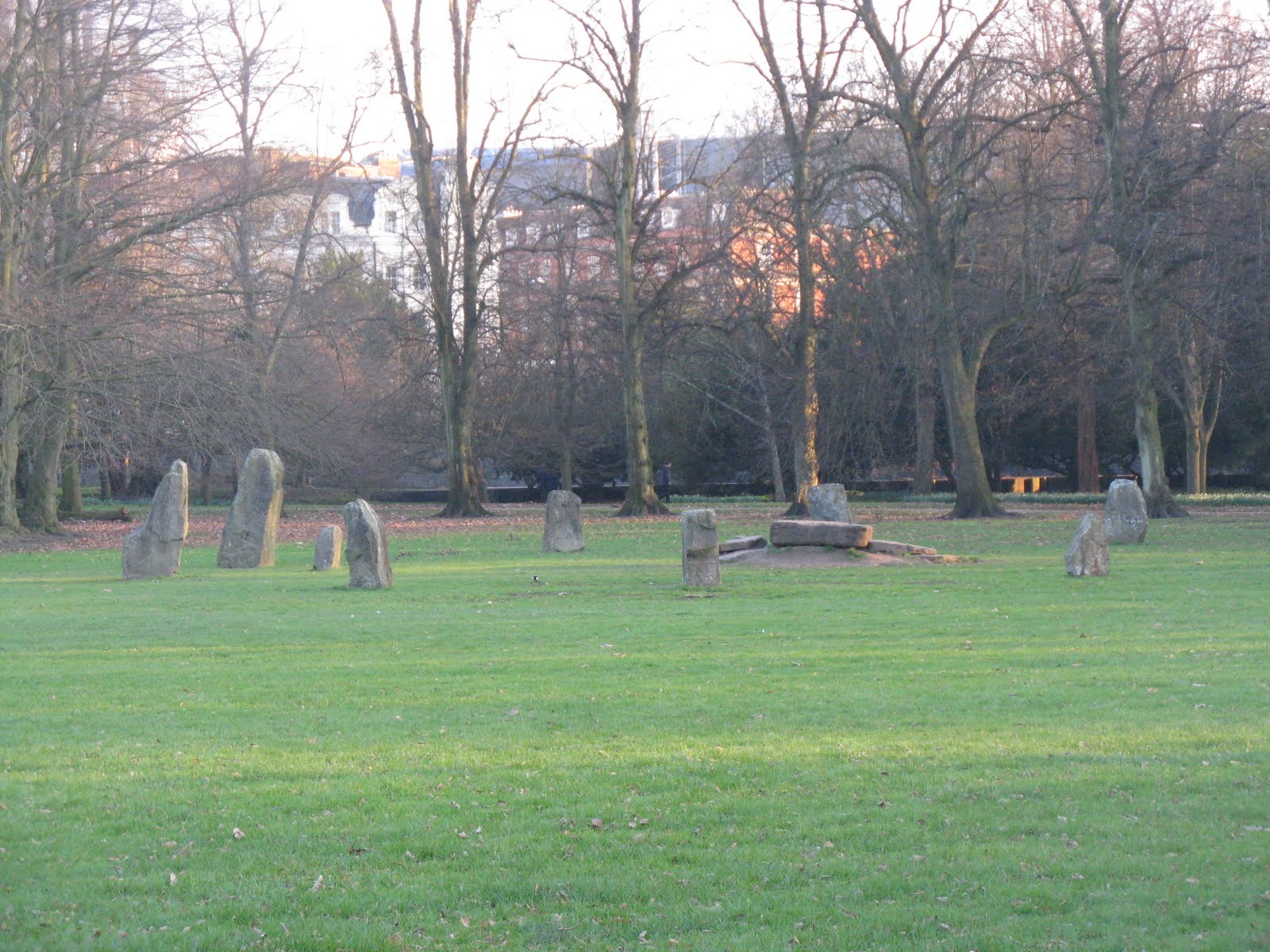

We also found an abundance of stone circles, which the ever-informative Lonely Planet tells me are from the Victorian period, not the ancient Celts. The Victorians were very fascinated with the past and a great deal of their art seems to be looking back to a nostalgic time of pre-industrial community with nature, etc. I'm pretty sure that this is actually the Stone Table where Aslan was sacrificed in The Lion, the Witch, and the Wardrobe, however. Yes, I know, I'm making ridiculous literary references again. You should be used to it by now.


Cardiff Castle shining in the beautiful late afternoon sun. Much more of this to come!


Steph and I spent a fair amount of time trying to locate medieval priory ruins that were in the park - they were a bit of a let down. I conquered them no problem.


The next day we had playtime at Cardiff Castle, which was all kinds of delightful.


There was a trebuchet, pronounced 'tray-bucket,' obviously, none of these outrageous French accents, just hanging out on the lawn, asking us to go be silly. Here we see Jess and Stephenie assuming the positions for a classic, musketeer-type duel, while Sarah and I prepare for the less conventional wizard duel.


Here's the gang in the castle keep, which was built by the Normans in the 1080s and then replaced with this stone keep in the 1130s. So yes, I did a bit more than just play on the lawn. Not much more, mind...
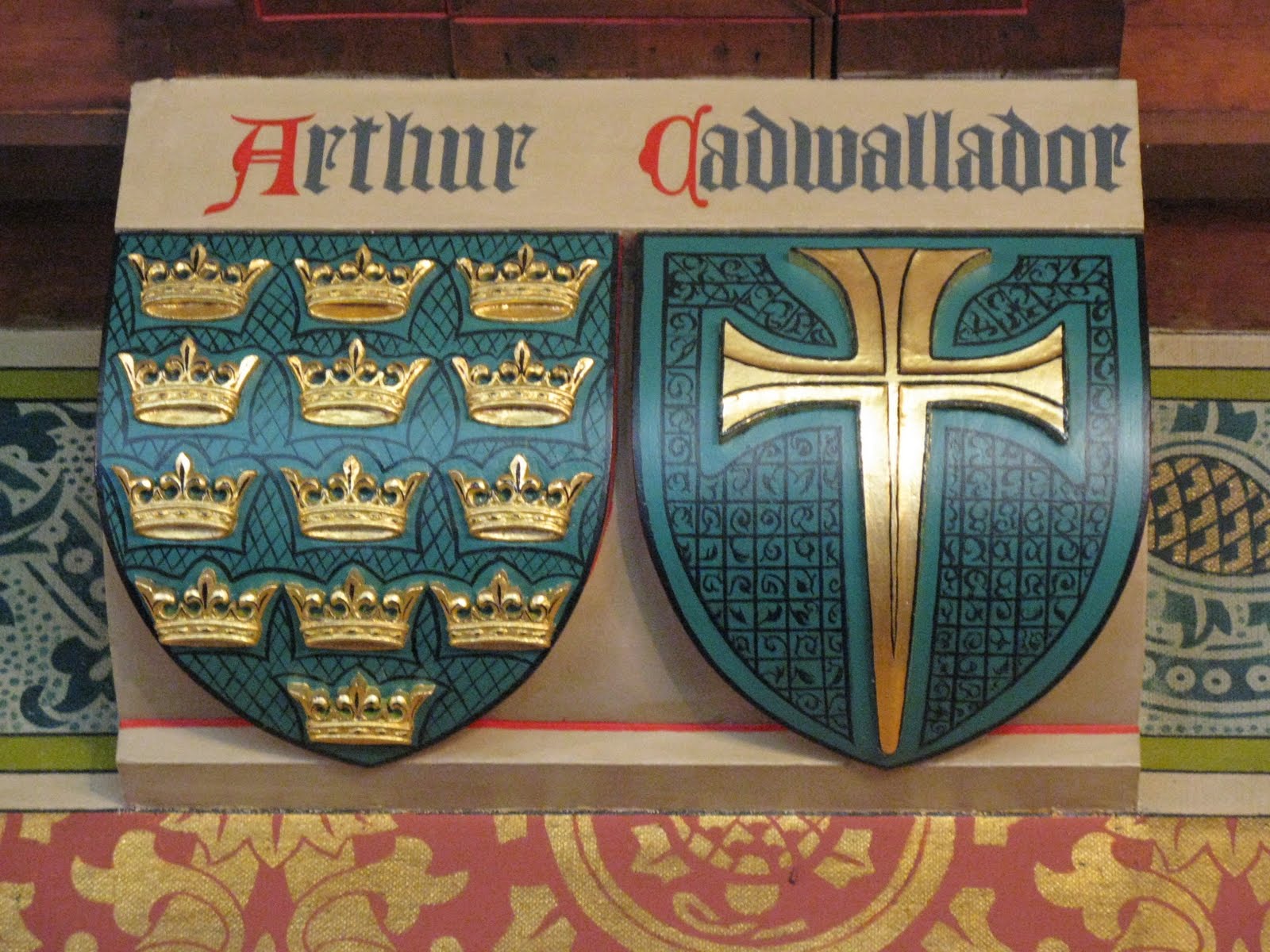

Yes, that Arthur. There was a sort of lineage of Welsh kings around the library in the castle apartments, which were restored in the Victorian period (again, that Victorian nostalgia and romanticizing of the past). The first written accounts of King Arthur come from the Welsh Mabinogion, a collectiion of heroic tales, and historians think that, if Camelot did exist, it was in Wales. Alright, miniature literature lesson over, promise (but, I mean, really, isn't this stuff cool?).


And, because we were in a castle and because we're awesome, Sarah and I had to duke it out k-niggit style in the gift shop. Dear Mom and Dad, aren't you glad that you sent me here to have mature learning experiences?


We headed to the other side of the city to check out the Doctor Who: Up Close exhibit after indulging our inner children at the castle all morning. Here I am with the Tardis, waiting for Matt Smith to come whisk me away to a different planet (although I'm actually quite fond of this one, so I plan on staying for a while).


This is the latest addition to my collection of weird signs in the U.K. I'm sure that there's some deeper meaning from the show of which I am ignorant, but I like to think that this one means that if you take a nap, Zeus will smite you with a thunderbolt.


Cardiff Bay

That's where my photographic record comes to a close - we spent our last day in Cardiff venturing from coffee shop to coffee shop, with a stop at a pub for lunch (where our server looked like Colin Morgan in Merlin - such a King Arthury trip) doing coursework. All of the pubs have signs saying something along the lines of 'Brains served here!' or 'We love Brains!' But never fear, Cardiff is not a city full of zombies - Brains is the locally brewed beer. Why it's named that, I cannot tell you. British rationale - who knows. I'm really glad that we got to see Cardiff, but I think that three days was a bit too much time. We did everything that we wanted to do in two days, hence our marathon coffee stint. I would have loved to see more of Wales beyond the city, but methinks that will have to wait for a future trip to the U.K.
More travel adventures coming your way soon, hopefully - we went to Edinburgh about a week and a half ago, and that was amazing. Edinburgh is probably my favourite city that I've visited, and I enjoyed my second trip there just as much as my first! But I hope that things are going well for everyone reading this, that spring is working on springing, and that you're remembering to seize the day. I'll be buried under books and papers for the next four weeks (minus ten days in which I'll be cavorting around Italy and Croatia), but I'll be in touch soon!

Wednesday, March 2, 2011

Let's Hear it for (Regular) York

Dear adoring public (otherwise known as Mom, Dad, and Grandpa),
Yes, yes, I know. I am a terrible, terrible blogger, and I apologize. In my defense, however, my quest to fight off the boredom of the five-day weekend has started to work! This is mostly because I have actual work for my classes, which is a nice change. So I've been reading and working on papers and presentations, continuing to fail grandly at archery (I hit the target more than the floor last week! This is definite progress), I've started yoga to counteract the stress of archery, and I am now in my third week of volunteering at Norwich Castle.
The interior of the Castle is part art museum, part Norfolk history museum, and the learning department does a lot in terms of activities for school groups and families, so I help with different activities and do some preparatory work behind the scenes. It's actually really, really fun. My first week I was there for an Ancient Egyptian themed day, so I spent my day helping eight year-olds make Egyptian collars out of bits of paper. They were excited once they realized that I was American, and I heard lots of stories about cousins, friends, etc...who moved to the States. Last week I was at the museum for an Ancient Roman/Iceni day, so all of the interpretors who I met were dressed either in plaid and blue face paint or in togas. It was great.
I was allowed to follow one of the groups in the morning in order to observe some of the activities. Their first stop was with a woman dressed as an Iceni chief, and she got them to think about how the Iceni lived compared to how we live today, and told them about the Roman oppression of the Celts. As an overarching idea for the day, the kids were supposed to be thinking about whether or not it was fair for the Romans to tax the Iceni so harshly - they took half of what the Iceni grew, raised, or made. The kids had never been exposed to this part of the story before, as the Romans are the ones who wrote history, and they portrayed the Iceni, as well as other Celtic peoples, as uncivilized barbarians. It was really interesting to see where the kids ultimately placed their loyalties. One little girl, fresh from learning about the Roman tax, told "Brutus," the Roman soldier who led the next rotation, that he and his people should just go home because the Celts were perfectly well off without them, thank you very much. He looked bewildered for a moment, but recovered quickly and said, "Kids, I'm going to tell you something about life: it's not fair. You want to know how to make it more fair? Get a sword."
This past week I was at Strangers' Hall, which is a beautiful Tudor hall that has served as a home and meeting place, and is now a museum. We had a group of nine year-olds down for a Tudor day, and they learned all about feasting, dancing, Tudor dress, and weaving. As I've mentioned before, Norwich was England's second city because of the weaving trade that grew up here when the "Strangers" came from the Low Countries. They used Strangers' Hall as a meeting place (fun fact: they also introduced the canaries that gave their name to the Norwich City Football Club) and brought their weaving technology with them. The kids were supposed to imagine that they were Strangers in Norwich in 1565, and during the day they learned about how different people in Norwich would have reacted to them. It was a really, really good program. I helped with the costumes in the morning, so I played lady-in-waiting and laced girls into bodices and petticoats, and then in the afternoon I helped with the craft activity, which was making paper looms and weaving. I had a great time, actually, and I got to spend the whole day in this beautiful Tudor hall, where ten year-old me would have had a field day letting my imagination run wild.
I love working with the kids, and I think that it's so important for them to see history brought to life like this. It's the difference between reading a Shakespeare play in English class and seeing it performed. The interpreters are great, as well. They're so dedicated to teaching students - most of them are former educators - and our lunches always involve several cups of tea and a chat about something historical, such as whether the Romans really were too oppressive and what they contributed to Britain. It's an indulgence for my inner history nerd.
So, excuses aside, we have now come to the travel adventure portion of the blog! The Dickinson Humanities Program, under the sometimes misguided leadership of Professor Qualls, who this time led us through several inches of mud instead of sticking to dry roads, ventured forth in the very early English morning to York. York is a beautiful city, made even prettier by the fact that the sun was shining. Quick historical rundown for you, brought to you by the fine people at Lonely Planet. York was originally home to a Celtic tribe that was then pushed off their lands by the Romans in A.D. 71. Gotta love the Romans. They used York as a garrison and Emperor Hadrian, of wall fame, used it as a base for his northern campaign. It was a very important city - Emperor Constantine was crowned in York in 306, which is pretty impressive. The next few hundred years are a bit of a hot mess - some Anglo-Saxons happened - and then the Vikings took York in 866. They renamed it Jorvic (from the Roman Eboracum) and made it the capital of their trading empire for one hundred years. The next major development in York's history was the arrival of the Normans, when the charming, gentle-hearted William the Conqueror up and torched the city and much of the surrounding countryside in an effort to show northerners that he was boss. Nice guy. The Normans then set about rebuilding York in the twelfth century, and eventually it came to be the beautiful city that it is today.

York Minster, which is the largest medieval cathedral in Northern Europe. It was built between 1220 and 1480 and is second in religious importance only to Canterbury Cathedral. Don't worry - you'll see more of it!


Turns out that Guy Fawkes was born here!


This is part of the Roman garrison that stood at York, as indicated by the red stripe, because apparently the Romans liked that kind of thing. The sarcophagi are also Roman. The Roman wall was then built up by medieval residents, and it's now one of the most complete medieval walls in the country.


The ruins of the Abbey of St. Mary's.


Our tour guide took us along the medieval town wall for a bit - here we are on Robin Hood's Tower. The poor guy had no idea what he was getting into. He told us that there was no reason for the name, but he did not count on having me in his group, or on the fact that I had been reading Robin Hood: A Mythic Biography on the train that morning (it's for a paper, I swear!). So, dear readers, I will enlighten you so that you will be less ignorant than my tour guide. The early Robin Hood ballads of the seventeenth and eighteenth centuries actually have Robin's home as Barnsdale, a village in Yorkshire. He frequently meets people coming from York and goes there himself sometimes. His location isn't cemented as Nottingham until later.


Check out these awesome flying buttresses shining in the late aftenoon sun. We climbed the tower in York Minster to see some stunning views of York at my favourite time of day.


What we could see lookiing North - the Yorkshire moors and the Kilburn Chalk Horse! You can't make it out in my picture of the actual landscape, and I could just barely see it, but it was there!


The Shambles, probably the most famous street in York. It used to be the butchers' street, apparently.


Because I strive to put Lord of the Rings references into everything that I do.


The Jorvic Viking Museum, where you could smell real Viking smells! Not that I have the most discerning nose in the world, but to me it smelled like my brother's room after he gets home from basketball practice. I'm just saying (sorry, Little Man). We were all a little bit punchy by this point, and Stephenie bought runes, which we proceeded to read at lunch.

All in all, it was a very successful trip to York, and we had a great time. By a happy chance, Caitlin and Sarah chose the same day to visit York from Durham, so we met up for dinner and a pint, which was a blast. York is an absolutely gorgeous city, and definitely worth a visit.
I know that I've been a horrible blogger of late, and there is much that I have to catch up on still. But now that things have kind of taken off and I've been doing more, time seems to be moving so much quicker. It's gotten to that point where things are happening too quickly, and June seems so much closer now than it did even a few weeks ago. I'm starting to think about what will happen when I have to leave everything that I've built up here, and it's absolutely terrifying. This has been the most amazing year of my life, and there is still so much to look forward to and so much living to be done before June. I just wish that I could press the pause button, because I do not want it to end. Everyone says, "Oh, don't think about it - you have time!" That's all very well and good, living in the moment and all that, and I do try. But it's impossible to ignore that niggling voice in the back of my head. It's made me think, though - society makes it impossible for us to really live in the moment. Even now, when my professors, family, and Global Education office are all telling me to live for the present, I still have to worry about summer jobs, classes for next year, accomodation, thesis topics, graduate school - how am I supposed to stay in the moment with all of that accumulating behind me? It's hard - a kerfuffle, one might even say.
But I have tried really hard this year to appreciate every day and to live in the moment as much as I can, and this is honestly the happiest that I've ever been. In that vein, I'll leave you with some wise words from John Keating in Dead Poets Society:
"Carpe diem. Seize the day, boys. Make your lives extraordinary."
It's not easy, but this year has shown me that the extraordinary is there, even in the little moments. We just have to find it and shut the door on all of the pressures that want to tear us away. At least for a moment.

Friday, February 11, 2011

Taking a Turn down Intellectual Avenue

So far my quest to stave off the monotony of the five-day weekend has gone as follows:
runs: 2
summer jobs applied for: 1
Robin Hood books read: 1
clubs joined: 1 (archery - I'm really trying to get into the Robin Hood experience, as I think that it will be beneficial for my dissertation. So far I have really shown the floor who is boss. The target, not so much.)
pub quizzes participated in: 1
movies viewed: 3
So, as you can see, it's an ongoing quest. The good news is that I am now very caught up with my world news, and I attended a free lecture the other day. Adrian Holliday, Professor of Applied Linguistics at Canterbury Christ Church University, gave a talk on "Cultural Understanding in a Globalized, Unequal World." As someone who a) has nothing to do on Thursdays and b) is very interested in other cultures as well as information processing in a globalized and digitalized world, I decided to check it out.
Professor Holliday made some very interesting points. He discussed how, even though we have access to so much information about different parts of the world in this age of digital information, our quest for cross-cultural understanding only addresses the shallow differences between different ways of life: festivals, foods, religious practices, etc. . . We divide people easily into groups based on our definition of culutre, and this can oftentimes mask racism or other prejudices. This tendency is actually stereotyping to the extreme, as we tend to ignore the fact that individuals are not defined by their cultural backgrounds. For instance, the protestors in Egypt are not defined by the regime that they recently succeeded in ousting, and I have spent the past five months trying to convince my flatmates that not all Americans are defined by former President George Bush and his administrative decisions or speeches.
Professor Holliday made the point that Westerners as a whole tend to be especially guilty of generalizing other peoples using a sort of “us versus them” mentality, and that we consider “modernization” and “Westernization” to be synonymous. This means that accepting Western ideals of democracy and fast food industries are factors that make a country “modern.”
After declaring this notion absurd, Professor Holliday said that Westerners have no right of ownership to things such as the English language, Western art, or even McDonald’s, because other people around the globe adopt these as part of a global heritage and “colonize” them for their own use. It makes sense: Americans have colonized English so that the language that I speak at home is very different from what I speak here, which would be very different from what an English-speaker in South Africa would speak. Where I disagree with Professor Holliday is the issue of material exports such as McDonald’s. I have always considered McDonald’s to be a metonymy for Europe’s view of America: supersizes, fake meat and lots of grease. But of course there are McDonald’s and other fast food chains everywhere here, and Professor Holliday seems to believe that this is not the result of Americanization, but of European countries adopting these chains for their own cultures. I’m sorry, you can try to disguise McDonald’s as a cafe, but it is still McDonald’s, and you can still get American fries there, even if they’re called chips. I’m sure that it’s also a lucrative business – a large percentage of travellers are American, and they’re drawn to the familiarity of the golden arches because it’s something that they know and recognize from home. The same holds true for Starbucks – I went into a Starbucks in Edinburgh, Scotland, and 90 percent of my fellow customers were American. It’s like having little American embassies everywhere.
It’s an interesting thought: is there such a thing as Americanization, or, as Professor Holliday believes, do other countries just adopt American or Western practices and colonize them to fit their own ways of life? And if other parts of the world adapt features of our culture, what do we colonize from other peoples? Is it balanced? It’s something to chew over while I avoid Starbucks like the plague in favour of restaurants that I can’t find at home. If I'm ever on the run from British authorities, however, I plan on fleeing to the nearest Starbucks, because they will harbour me as an American citizen.
Because that was a little on the deep side, here's another British cultural export: Mumford and Sons. They're an awesome band, and they just did an awesome performance on the Grammy's last night. Definitely worth checking out!

Thursday, February 3, 2011

Salzburg: The Hills Are Alive with the Sound of Mozart

Onto Salzburg, land of mountains, Mozart, mountains, The Sound of Music, and oh yes, mountains. Salzburg is a beautiful little city nestled in between hills that give way to the Alps (!), and it is probably best known as the birthplace of Wolfgang Amadeus Mozart and as the home of the Von Trapp family. For me, though, it reminded me of Innsbruck, which is where I fell in love with Austria three and a half years ago. So where Vienna disappointed, Salzburg enchanted.

Looking over the River Salzach to the Monchsberg ("berg" meaning mountain). The castle-looking building on the left is the Museum of Modern Art, and the one lower down the mountain on the right is the Augustine Brewery.


View of Hohensalzburg (Salzburg Fortress) on top of the Monchsberg from the city square. Clearly, people in Salzburg heard about the crazy statues in Bratislava and so decided to build their own.


The Big Man himself - Mozart is absolutely inescapable in Salzburg, even though he himself found it a stifling place to be. He moved to Vienna when his career took off and hardly ever looked back.


Mozart's birth house, which is now a museum overrun by tourists. Seriously, I was almost bulldozed by one very eager group. But the museum has a cool collection of Mozart artifacts, including a violin that he played on as a child. It also offers an interesting look into the Mozart family, all of whom were musically inclined, but of course Mozart's sister couldn't do more than teach piano because God forbid, she was a woman.


Climbing the Monchsberg, where we saw gorgeous views of Salzburg. Such a beautiful city.


View of Hohensalzburg from further down the mountain at Richterhohe. The fortress was built between 1077 and 1681 by the ruling archbishops of Salzburg - each one made some kind of alteration or addition, which accounts for the mixture of architectural styles in the building. It is the largest completely preserved castle in all of Europe, and we climbed the watch tower to see:


MOUNTAINS!!!!!!!!!!!! I mean, normal levels of excitement. The big mountain is Untersberg, and it's the mountain where they filmed Julie Andrews singing "The Hills Are Alive," and the Von Trapps escape over the mountains into Switzerland. It's not the actual route they took, however, as Germany lies just on the other side of this particular mountain!


Confession: I could hear Bilbo Baggins in my head saying, "I want to see mountains again, Gandalf, mountains!" the entire time I was in Salzburg. Much as they tried to beat it out of my head by blasting Mozart and The Sound of Music incessantly.


The famous pavilion where Rolf and Leisl sang "You Are Sixteen Going on Seventeen." It was built specifically for the film and has since been moved to its present home at Hellbrunn Palace. Unfortunately you can't go inside of it anymore because an 80 year-old woman attempted to play Leisl and go hopping from bench to bench, and she broke her hip. Also, it was miserable and pouring rain!


The wedding church in Mondsee, a village in the Lake District outside of Salzburg. This is where the interior of the wedding scene was shot for the movie, but not where Maria and Captain Von Trapp were actually married. Their real wedding took place at Nonnberg Abbey in Salzburg, where Maria was also a novice. The exteriors of the wedding church were shot at another church, but filming crews got into trouble for putting up swastikas without permission and they had to move to this church.


The interior of the wedding church, where Maria walked down the aisle.

So unfortunately our Sound of Music tour was very wet and miserable, and we didn't get to see very much. Our tour guide drove us through the Lake District, which is supposed to be absolutely stunning, but it was so foggy that we literally could not see the mountains that I know were looming up ahead, just teasing me. We stopped in the tiny village of St. Gilgen's, where Mozart's mum was born, to admire the alpine scenery that we couldn't see and because we hadn't gotten our daily dose of Mozart yet, and then ended the tour in Mondsee, where we combatted the grey weather with delicious, hot apple strudel.
So although the weather didn't cooperate, we enjoyed ourselves and we got to see a lot. I really, really want to return to Salzburg in the summer when the sun will be shining. But yeah, that's the last installment of our trip! The next day we flew back to London, and I experienced air traffic for the first time. I had never seen another plane fly by in midair - they give off black exhaust, none of this white, puffy jet trail business. So I was looking out the window, clutching the arm rests with white knuckles because I hate flying, when I saw black smoke billowing up on the horizon. Sarah turned to me and said, "Are those... Death Eaters?" Thankfully we were not attacked by any Harry Potter villains, however, and we made it safely into London, where we were greeted by more clouds and rain. Sarah and I got back to Norwich and just collapsed at UEA, very glad to be back.
I was surprised at how much I missed England while I was gone. I think that I definitely needed a break from its eccentricities, but as we encountered obvious anti-tourist prejudice in Central Europe, I started to miss the famous English politeness more and more. When we got on the plane in Salzburg someone said, "Cheers!" and I was very excited. So this trip was perfectly timed - I got back to England ready to forgive all of its inconveniences and to have a great second semester. And so far it has lived up to my expectations! Although we miss Laura a lot, the person who moved into her room was actually my next door neighbour from uni last year, which was unexpected to say the least, but a nice surprise. I keep expecting the Doctor to show up because there are two parts of my life that are never supposed to have touched, but there don't seem to be any galactic ramifications yet. So the past two weeks have been full of readjusting, going out with my lovely flatmates, enjoying visits from great friends, and getting into the swing of classes again. Normal living business, but very enjoyable! I'm going to start traveling again soon, though, but I needed a break for a bit. I learned a lot planning this trip, and I feel like I grew up quite a bit. I never thought that I would be navigating airports by myself, let alone navigating public transportation in different languages and planning an entire trip. And yet I did - I think that this is the kind of education that I'm really receiving this year. Yes, I have my amazing King Arthur class, but I'm learning how to travel and to do the things that I want to do, not to mention shaping my world view by encountering different cultures and ideas. A global education, indeed.

Sunday, January 30, 2011

Okay, I Buy Ticket: Vienna

So, I may have taken a week-sized break from anything productive, such as continuing to update my blog. To be fair, I have made extensive plans to be productive, but I seem to be failing on the execution. I think it's because the grey skies of England are slowly eating my soul away, and because I only have class two days a week, which sounds good but in reality it means that boredom is also eating my soul and I now have no motivation to do anything. I had a dream last night that I got my jobs at Dickinson back, and I was so excited because it meant that I had something to do on Thursday. But fear not, I plan to stare this week down, full of resolve, and get things done! This means everything from applying for summer jobs, finding volunteer work, working on my Robin Hood paper, exploring Norwich, reading those books that I've always wanted to but never seem to have the time for, and planning more trips. Oh, and watching three seasons of Doctor Who, which is the activity that seems to have taken precedence right now. Argh. As Ron Weasley would say, I need to sort out my priorities.
Okay, time-languishing rant over. I have lots and lots to look forward to, and I had an absolutely wonderful week. Sarah and Caitlin came to visit from Durham, and we had such a good time!!! I love my friends. But I'm supposed to be telling you about Vienna! Fear not, I have not forgotten. We finished our bagels and bade an unceremonious goodbye to Bratislava on the coach to Vienna. I was very excited when we crossed the border, because I could actually start to recognize words in German, such as "Sparkasse," which means bank. I was so proud of myself. We checked into our hostel in Vienna, where we got a sunny yellow room all to ourselves! It was very nice, although I was looking forward to rooming with half of Australia again. Sarah and I headed to a traditional Austrian restaurant for dinner (we did not mess around when it came to food), where we discovered an amazing dessert called kaiserschmarren, which is a caramelized pancake covered in powdered sugar and served with stewed plums. It is delicious!
Full of caramelized pancake, we began our explorations of Vienna the next day. The weather was foggy and gross, so that was a little upsetting. I could have stayed in England if I wanted grey mist, Austria! But the weather did not stop us from finding adventures. Beautiful buildings ensued as soon as we got off the metro:


Neue Hofburg, part of Hofburg Palace and home of the Austrian National Library.


The State Hall in Hofburg Palace, which used to be the library. It was built for Emperor Charles VI (the subject of the statue), and the pamphlet calls it a "jewel of profane baroque architecture." I think there's a bit of mistranslation going on there, but Sarah decided that this was the inspiration for the library in Beauty and the Beast. Also, just so you know, the sculptors were named Peter and Paul Strudel.


Yes, really! Complete with Mozart blaring from the speakers.


Karlskirche, or Saint Charles, which has lovely ceiling frescoes that can be reached via this:


An architecturally sound, safe contraption chilling 35 meters above the ground. You take this elevator up to a platform that I swear is just resting on the base of the dome, and then YOU HAVE TO CLIMB STAIRS ON TOP OF THIS RICKETY MADNESS!!! It was so scary. I'm pretty sure that I lost a few years off my life.


Sign on top of the rickety madness. Anne has translated it for me, but I don't believe her. I know that it says "The structural soundness of this platform is nonexistent. Safety is uncool."


The Belvedere, once the summer residence of Prince Eugene of Savoy. Today it's an art museum that houses a large collection of pieces by Gustav Klimt, including "Judith" and "The Kiss." I have also decided that I want to make this my summer residence.


Hofburg Palace, home of the Hapsburgs.


Stephansdom, or Saint Stephen's Cathedral. I climbed the South Tower, which you can just see over the tiled roof mosaic of the double eagle standard, the coat of arms of both the Holy Roman Empire and later the Austrian Empire.


I am still puzzled by this sign - does it mean that heterosexuality is frowned upon in this part of the city?


Trying the famous Sacher Torte at the Sacher Hotel, one of two places in the entire world where you can get the real thing. It's a Viennese specialty - chocolate cake made with rum and apricot preserves, with a layer of marmalade, cased in dark chocolate. For the cheaper British alternative, try Jaffa cakes.


Schloss Schonbrunn, Maria Theresa's summer home. Sarah has decided that she is going to establish residence here.


Overlooking Sarah's back gardens. They're quite lovely.
So that's a quick pictorial tour of our time in Vienna. We also visited the Sigmund Freud Museum, but I did not take pictures there. Vienna is a beautiful city, but it wasn't my favourite part of the trip. It kind of just felt like another big city, and I kept forgetting where I was. We also encountered some very rude people, which was certainly off-putting. Waitstaff at restaurants would blatantly ignore us, and we had to get up and do a jig to attract enough attention to order our food. Sarah and I sat at dinner once for four hours just because no one would acknowledge us. We clearly didn't fit in, but we weren't being obnoxious and we were very polite. I would have thought that people in cities that depend on tourism for a large part of their annual income would have been a bit more welcoming. Needless to say, I was thrilled to escape Vienna for Salzburg and for the mountains. That's right - there are hills, and they are alive.

Tuesday, January 25, 2011

Bratislava - Bless You?

The next stop on our trip was a last minute addition - Bratislava, the capital of the Slovak Republic. The Slovak Republic has only existed since 1993, I believe, as it was part of Czechoslovakia before that (see what they did there with the names? Pretty nifty stuff). But Rebecca wanted to see the land of her ancestors, and Sarah and I just wanted to see places, so we set off on a 7 a.m. business class coach (so nice!) from Prague to the quirky city of Bratislava.
Unfortunately we left the sun in Prague and didn't see it again for the rest of the trip, and the coach station is not usually the best part of a city, so Bratislava did not appear to best advantage when we first saw it. Its aspects improved as we got closer to the old city centre, however, and its quirky charms kind of snuck up on me. As we were on a a native food kick, we had our first Slovak meal at the Slovak Pub, which, you guessed it, serves traditional Slovak food. After finally convincing the server to take our order (she was not pleased that we wanted to order food, not quite sure why), we dug into real, authentic perogies.
This means that they were not battered and fried, as Dickinson seems to feel is necessary, but served with bacon, sheep's cheese, and dill sauce. Good stuff.
After lunch we set out to get our explorer on. Bratislava is very small, so we were able to cover most of the touristy things in one afternoon, especially since everything was closed for Epiphany. We discovered some delightfully colourful buildings (which made a very nice contrast against the grey weather. Looking at you, England) and some very unique statues.


Sarah and I felt right at home, although we were puzzled that we had never seen this stop on the Tube map before...


Our first real stop was Bratislavsky Hrad (Bratislava Castle), which was closed. But it was here that we got a lovely view of the city and found...


Svatopluck! He quickly became our new favourite hero and the mascot for our trip. Many legendary stories were written about him.


Aforementioned lovely view of Bratislava. You can see the New Bridge over the Danube River in the distance - it looks like a spaceship.


Quirky statue 1: Napoleon. He burnt down Bratislavsky Hrad when he swept through, so they built him a cheerful statue. Weird? Yes.


Quirky state 2: Schone Naci, a local dandy who lived in Bratislava in the early 20th century.


Quirky statue 3: Rubberneck, which is apparently the world's only statue sticking its neck from a hole in the ground. Yeah, because we really needed one of those... Anyway, he's been decapitated twice by rogue drivers, so the good people of Bratislava gave him his very own Man at Work sign.


St. Elizabeth's Church, most aptly nicknamed "The Blue Church."

Sites not pictured: the narrowest building in all of Central Europe, which is 130 cm wide and is home to a kebab shop, and other eccentric statues. I'm glad that we stopped in Bratislava, especially since it's somewhere that I'll probably never return to, but I'm also glad that it was only a one-night stop. We came, we saw, we had really good bagels, and we talked to a really nice young woman while eating our bagels. She studied abroad in New York, and she was telling us all of the other places that we should see in Slovakia. They sound amazing - if only I had the time and resources to travel everywhere. But it was not to be on this trip, and later that day we were in Vienna! More to come on that later. Right now, I have to get ready for my lecture on Chartism in Victorian Britain. Whee. I guess that will balance out the sheer, unadulterated awesomeness of my King Arthur class.
Before I head off to what promises to be a thrilling afternoon, though, I have to recommend one especially delightful piece of British culture. The BBC did a modern adaptation of Sir Arthur Conan Doyle's Sherlock Holmes, entitled Sherlock. It's a three-part miniseries on Masterpiece Theatre (and I do love Masterpiece Theatre very, very much), and it is fantastic! It stars the delightful Benedict Cumberbath as Sherlock, and Martin Freeman (soon to be appearing as Bilbo Baggins in The Hobbit - so excited! Less excited for Richard Armitage as a dwarf king, but we'll see how that goes) is Dr. Watson. They do a great job, it's really well-written, and just fun to watch. Also, a good way to procrastinate for 5.5 hours! So there you go, your recommended British cultural export of the day.